All of the Gospel stories are about real issues. They speak to what’s on our minds and what troubles our hearts. They strengthen us when we doubt. They offer hope amid despair, light when we face darkness and comfort when life feels threatening. God speaks to us through these stories. They accompany us on our journey, and they are our compass keeping us on track when we are lost.
Today’s Gospel is a good example of this. Like the other Resurrection accounts, the Gospel of Luke focuses on the first day of the week and he too features the empty tomb. But Luke's account is much more low-key. He was writing for a Christian community about 50 years after the Easter event. His audience is a long way from Jesus’ time and they might ask, as we might: “How is the risen Christ in our midst now? Where shall we look for and find him?”
Luke’s response to such faith questions is his description of Christ’s appearance in a setting that he structures like a Eucharistic liturgy as it might have been celebrated by the early Christian communities.
The story opens with two of Jesus' followers, confused and disappointed about the events of His life and death. “We were hoping that…,” they tell the stranger who has joined them on the road. Things had not turned out the way they had hoped. Things seldom do.
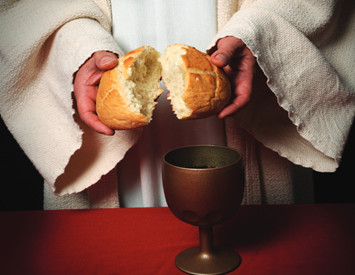
But then the story begins to move quickly. They become fascinated with this stranger. They follow him and listen. Their hearts begin "to burn with desire" when he breaks open the Scriptures, enabling them to understand God’s plan in what had just happened. And their eyes are opened when, at table with him, they begin to witness the risen Lord in the breaking of the bread.
What about us? Where do we find the Risen Christ? We don’t get to have the extraordinary appearances of Christ that the disciples in the upper room experienced. His presence in our lives is not preceded by beings dressed in robes of dazzling white. Nor does He appear to us as he did to Thomas, inviting us to touch his wounds.
But he does accompany us along the road. We live in a shattered world, facing senseless gun violence, political treachery and revenge, hate crimes, terrorist attacks and unprovoked wars. Evil is on display. And it touches our lives every day. Things can never be the same. Normal will never be normal again. At dawn, on that "first day of the week," the Risen Lord shocked his followers and challenged their faith. Normal was never normal for them ever again.
For us, this is our "first day of the week," and we are reminded that whether we run away from the Lord at the low points in our lives (like those who hid in the upper room) or fail to recognize his ever-abiding presence among us (as did the disciples on the way to Emmaus), there is always the chance for a new beginning.
As we sing the joyful songs and Alleluias, let’s pray that our eyes might always be opened to recognize his presence in our lives and in the lives of those around us. It is never too late to start over again because we too, like the first disciples, have been guilty of missing the mark. We are guilty of being way off track. Yet the final words of today's Gospel are aimed at no one other than ourselves. Our eyes have been opened, and our hearts are burning because we are truly “the witnesses of these things.”